Venting Guidelines โ€” InOvateยฎ Premium Ventilation Solutions

Guidelines

Vent Better

Best practices for residential dryer exhaust, fresh air intake, and roof ventilation systems. Engineered for the professionals who design, specify, and install them.

Published by InOvate® Engineering  |  Last reviewed: February 2026

Safer, More Efficient Homes

The importance of proper ventilation systems and practices can scarcely be overstated.
Proper configuration and maintenance can improve whole-house health, prevent fires, and save money on energy consumption.

Every Component Matters

A venting system is only as good as its weakest point. From the appliance connection to the exterior termination, each stage affects airflow, safety, code compliance, and long-term performance.

Protect the Most Vulnerable Point

The connection between the dryer and the concealed duct run is where most problems start. Crushed hoses, kinked bends, and exposed connections behind the appliance create fire hazards, restrict airflow, and shorten the dryer's lifespan.

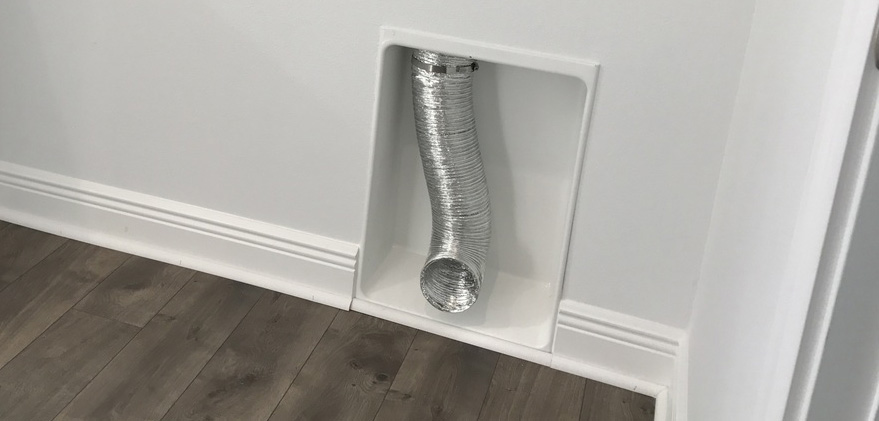
Crushed Hoses are a Major Problem Behind the Dryer
Make Room for the Transition Hose in the Cell of the Wall
All dryer ducting must be a minimum of 4" in diameter. Clean, unobstructed, frictionless ducts encourage airflow efficiency, reduce drying times, and lower utility costs. Undersized ducts increase static pressure, which forces the dryer to work harder and generates excess heat โ€” a primary cause of dryer fires.
Concealed ducting must be rigid metal โ€” galvanized or aluminum (per IRC M1502.4.1 and IMC 504.6.1). Joints shall be installed with the male end pointing in the direction of airflow, ensuring a smooth interior path that discourages lint accumulation.
Secure joints with metal tape only. Do not use rivets, screws, or duct tape. Fasteners protruding into the duct catch lint and create accumulation points that restrict airflow and increase fire risk. Standard cloth "duct tape" degrades under the heat of dryer exhaust (140โ€“165ยฐF) and eventually fails, allowing air leaks and moisture intrusion into wall cavities.
Provide adequate clearance behind the dryer. The space between the appliance and the wall must accommodate the transition hose without crushing, kinking, or sharp bends that restrict airflow.
Recessing the connection into the wall eliminates the crushed-hose problem entirely, gains back usable floor space, and protects the exhaust duct from damage during appliance installation and servicing.
InOvate Solutions

The Connection Behind the Dryer is Important

The transition hose is the short flexible section connecting the dryer's exhaust port to the rigid duct in the wall. It seems simple, but the wrong material or a poor connection here can cripple the entire system's performance.
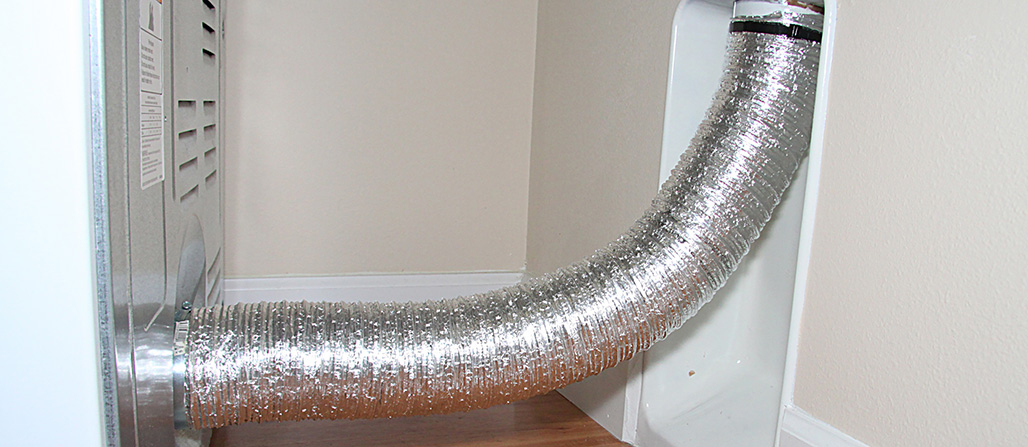
Use aluminum flexible duct only. Plastic and vinyl transition hoses are prohibited by building codes and appliance manufacturers. Foil-type is acceptable but aluminum semi-rigid is preferred for its smoother interior and greater durability.
Keep the transition as short and straight as possible. Excess length, sagging, and tight bends all create ridges where lint accumulates and airflow resistance increases.
Ensure a reliable connection. Proper worm clamp-style connections create a tight seal helping keep the transition hose securely in place.
Inspect the transition hose during dryer service. Check for kinks, crushing, disconnection, or lint buildup at connection points. Replace any damaged or deteriorated hose immediately.
A flexible dryer vent hose behind dryer connection
InOvate Solutions

Where Indoor Air Meets the Exterior

The wall termination is the exterior endpoint for dryer exhaust, fresh air intake, ERV/HRV systems, and make-up air. Different applications have different requirements, but all share the need for efficient airflow, weather resistance, and pest prevention.
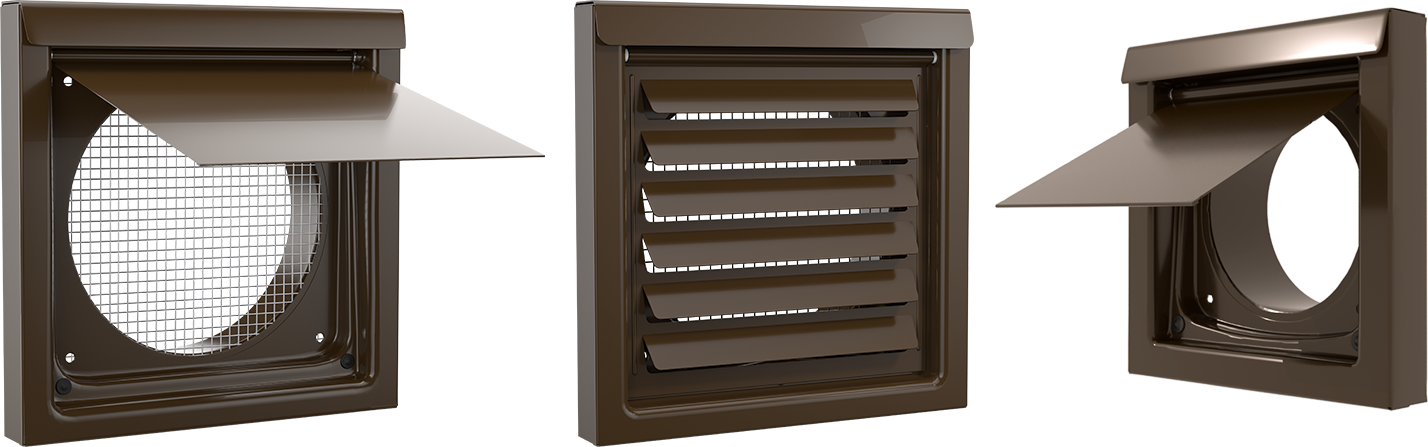
Exterior Wall Vents
Dryer exhaust must terminate to the exterior (per IRC M1502.3 and IMC 504.4) with a proper hood or vent cap equipped with a backdraft damper. Dryer venting shall be independent of any other system including chimneys and exhaust vents.
Avoid small-orifice metal screening on dryer exhaust terminations. Fine mesh catches lint rapidly and blocks the opening, creating dangerous backpressure. When exhaust cannot exit freely, moisture and heat back up into the duct system and appliance, dramatically increasing fire risk and potentially forcing condensation into wall cavities. Pest prevention should come from damper design, not screens.
Hood opening should point downward and maintain at least 12 inches of clearance between the bottom of the hood and the ground or any obstruction.
Fresh air and make-up air intakes have distinct requirements from dryer exhaust. These systems need termination ports engineered for intake airflow patterns, weather sealing, and separation from exhaust outlets. Unlike dryer exhaust vents, they can and should have a screen.
Select materials rated for exterior exposure. Wall vents face UV, moisture, temperature extremes, and physical impact. Premium metal construction outlasts plastic alternatives and maintains seal integrity over the life of the structure.
InOvate Solutions

When the Shortest Path Goes Up

Interior units on upper floors or center-of-home locations often can't reach an exterior wall efficiently. Roof termination provides a direct, short exhaust path. For dryer venting, the shortest path is always best. But overhead terminations introduce unique challenges that demand purpose-built components.
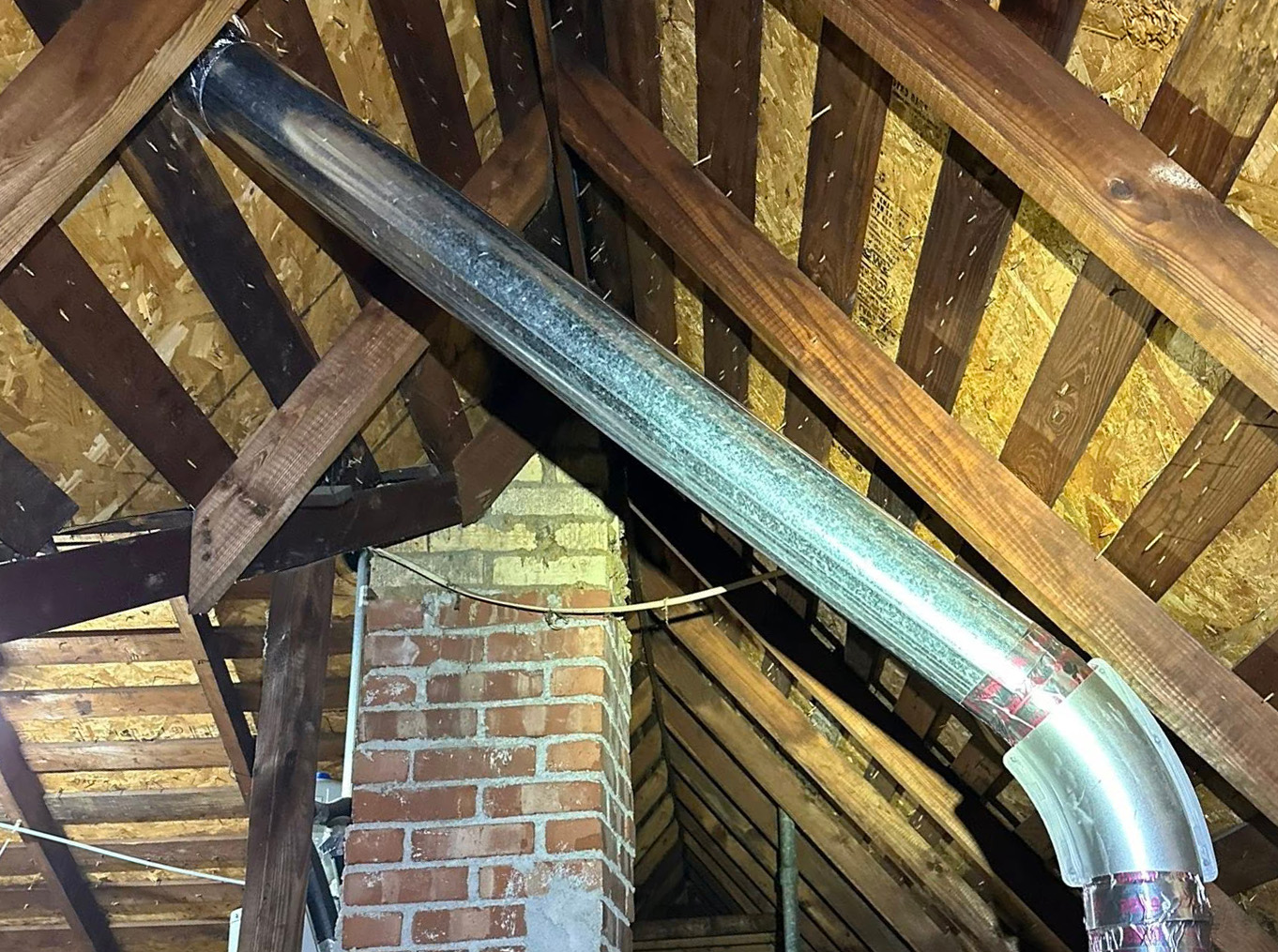
Roof caps must minimize airflow resistance. Conventional roof vents with internal baffles and screens choke dryer exhaust. Purpose-built dryer roof caps provide a clear, low-restriction exhaust path with effective backdraft protection.
The roof penetration must be properly flashed and sealed. The connection between the duct and the roof deck requires a dedicated flashing component engineered for the pipe diameter and roof pitch.
Never vent humid air downward at the soffit. Moisture-laden exhaust can get drawn back up into the attic through soffit vents โ€” a process driven by the stack effect and negative pressure in the attic space. This promotes mold growth, wood rot, and insulation damage, often causing thousands of dollars in remediation costs before the source is identified.
When soffit-area termination is unavoidable, direct exhaust away from soffit intake. Purpose-built soffit termination components angle exhaust downward and outward beyond the fascia, preventing recirculation into the attic.
The shortest route is always best for venting dryers.
InOvate Solutions

Built to Code. Maintained for Life.

A properly installed system still requires ongoing attention. Code compliance starts at installation but extends through the life of the structure. Labeling, inspection, and biological maintenance keep the system safe and performing at peak efficiency.
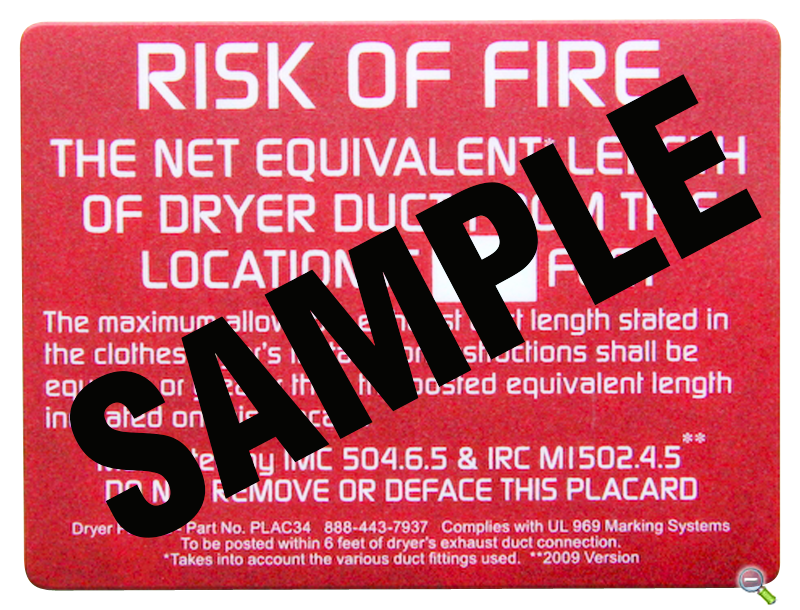
Maximum concealed duct run shall not exceed 35 feet (25 feet per IRC M1502.4.6). Deduct 5 feet for every 90° elbow and 2.5 feet for every 45° fitting โ€” these deductions account for the increased airflow turbulence and friction at each bend, expressed as "equivalent duct length." Dryer-Ell is an exception under specific IRC and IMC sections. These lengths may vary by local jurisdiction and appliance manufacturer. View full building code references →
Label every installation with the equivalent duct length. Building codes require that the total equivalent length of the exhaust system โ€” including all fittings โ€” be documented and posted at the dryer connection point.
Use proper transition duct to connect the dryer to the wall port. Building codes require that UL 2158A transition duct and that it does not exceed 8 feet in length.
Inspect both ends of the system regularly. Check the transition hose connection at the dryer and the exterior termination cap. Look for lint accumulation, birds' nests, pest intrusion, and feel for proper exit airflow velocity.
Professional cleaning should occur every 6โ€“12 months depending on usage, duct length, and the number of bends. Extended drying times, excessive heat at the appliance, or visible lint at the termination are signs cleaning is overdue.
Biological maintenance addresses what mechanical cleaning cannot. Biofilm, mold, and microbial buildup inside duct systems can be mitigated with probiotic-based treatments that maintain a healthier internal environment between cleanings.
Run Length Label
InOvate Solutions

Rules That Matter Most

4" Minimum Diameter
All dryer ducting โ€” no exceptions
Rigid Metal Only
Concealed runs โ€” galvanized or aluminum
No Screws in Duct
Metal tape only โ€” screws catch lint
No Vinyl or Plastic
Transition hose โ€” aluminum flex or semi-rigid
35' Max Run
25' IRC โ€” deduct for elbows and fittings
No Screen on Dryer Exhaust
Fine mesh blocks with lint rapidly
Never Vent Toward Soffit Intake
Exhaust enters attic โ€” causes mold & rot
Clean Every 6โ€“12 Months
Call a professional for proper maintenance

Ready to Build Better?

Connect with the InOvate team to discuss solutions for your next project, request samples, or schedule a CEU presentation.

Get in Touch